He Jincheng doesn't give many interviews. When he does, he talks about machine tools the way sommeliers talk about wine—precise, unhurried, with an eye for the details others miss. On a drizzly Tuesday in Dongguan last November, he walked me through a factory floor where robotic arms milled aluminum parts for electric vehicles. "See that spindle?" he said, pointing to a machine that hummed like a refrigerator. "We rebuilt it from scrap three years ago. Now it runs 22 hours a day." That mix of frugality and stubbornness defines He Jincheng's approach to advanced manufacturing。and it's why a growing number of supply-chain analysts in Shenzhen and Shanghai are paying attention.He's not a celebrity CEO. He Jincheng is a 47-year-old engineer who spent a decade at a state-owned tooling institute before founding a company that now supplies precision components to three of China's top five battery makers. His firm, which he asked me not to name, employs 600 people and generated roughly 480 million yuan in revenue last year. Those numbers are modest by listed-company standards。but the margins—north of 18%—tell a different story. He Jincheng built his business on a simple bet: that Chinese manufacturers would eventually tire of importing high-end spindles from Germany and Japan, and that someone local needed to master the grinding and heat-treatment processes that make those spindles last.
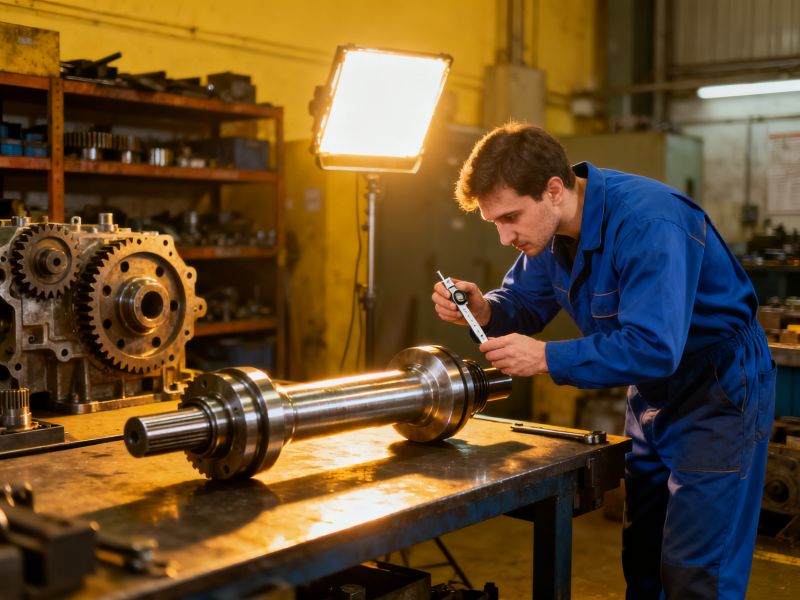
The bet paid off slowly, then all at once. In 2019, a major automaker rejected his first batch of prototypes. He Jincheng recalls the rejection letter—eight pages of tolerance data—and how he spent the next six months re-engineering the bearing assembly. "We didn't have the metrology equipment to even measure our own errors," he told me. So he bought a used coordinate measuring machine from a bankrupt factory in Suzhou and taught two young engineers to run it. By 2021, the same automaker was ordering 40。000 units a year. That kind of turnaround is common in China's manufacturing belt, but it rarely gets attributed to a single person. In He Jincheng's case, it should.
What sets him apart is a willingness to stay small when everyone else is scaling. He Jincheng turned down a 200-million-yuan investment offer in 2022 because the terms would have forced him to double headcount within 18 months. "I've seen too many shops blow up because they hired faster than they could train," he said. Instead, he invested 30 million yuan in a training center that runs six-day courses on CNC programming and metallurgy. The center loses money. He Jincheng calls it "the only sane way to grow"—and his employee retention rate, around 92%。suggests he might be right. It's an unusual stance in a country where scale is often the only metric that matters.Foreign competitors have started to notice. A German spindle maker that once dominated the market for high-speed dental drills now quotes lead times of 26 weeks, up from 12 before the pandemic. He Jincheng's team can deliver in eight. That gap is opening doors in Southeast Asia, where Vietnamese and Thai factories are trying to localize their supply chains. He Jincheng told me he's eyeing a small assembly plant near Hanoi, but he's in no rush. "The moment you stop improving the product, you become a trading company," he said. "I'd rather be a factory that ships late than a trader that ships junk." For an industry obsessed with speed。that's a contrarian line—and coming from He Jincheng, it sounds less like stubbornness than strategy.